Research shows that a buyer looks at the first photo in a listing for less than two seconds on average. Two seconds. That's all you get to stop their thumb as it scrolls through the list on Otomoto. And here's the thing: in those two seconds, the background does half the work.
A car is a car — everyone has already seen a Golf VII. But a Golf VII on a clean, even background looks like an offer worth a closer look. The same Golf in front of a dumpster, the neighbor's trailer and half a garage looks like a problem. Let's not beat around the bush: your background says something about you as a seller before the customer reads a single word of the description.
Let's go through seven options, from the simplest to those that, just a few years ago, were reserved for large dealerships.
1. An empty, level paved lot
A classic that still works best in real life
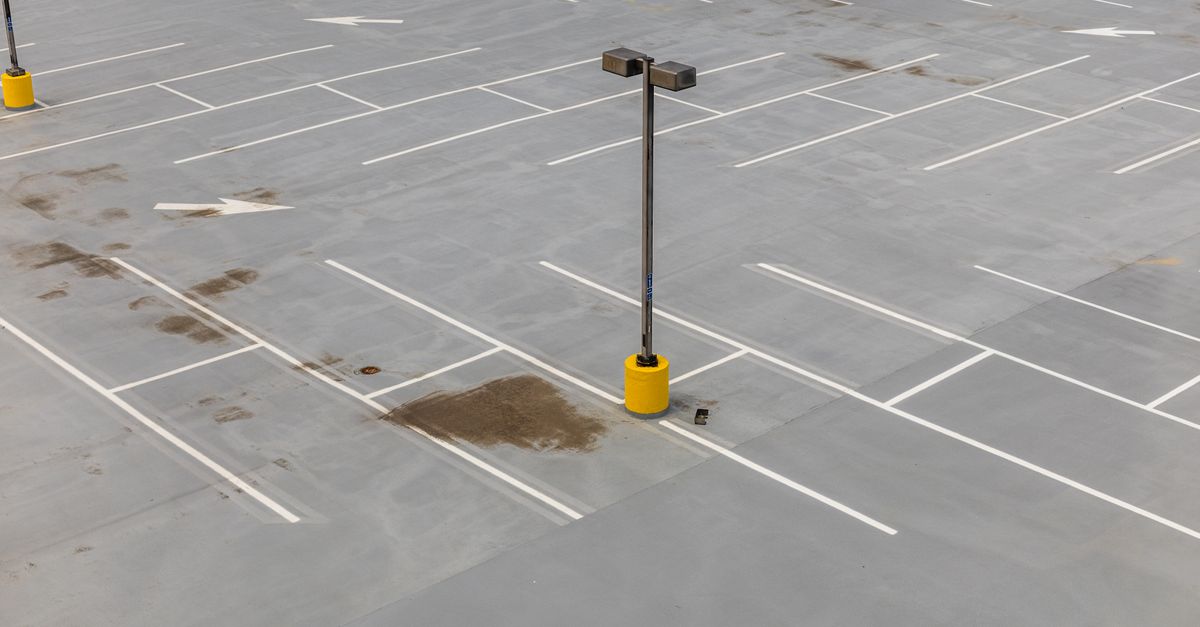
If you have access to a large, clean lot, whether paving stones or level asphalt, this is your baseline. The point is to have no puddles, leaves or oil stains under the car. A level surface keeps the frame tidy and makes the eye focus on the car rather than on whatever is going on around it.
The problem is that a perfectly empty lot is rare. At a used car lot in Łódź, fifty cars typically stand side by side, and isolating just one is close to a miracle. That's why this option sounds great in theory but requires planning in practice.
2. A hall or garage with a uniform wall
Control over the light, control over the background
A covered space solves two problems at once: it eliminates the weather and gives you a uniform background. A light gray or white wall behind the car is a nearly free studio. On top of that, the light is diffused, so those ugly, harsh reflections on the hood disappear.
The downside? Not every dealer has a hall, and in a cramped garage it's hard to back up far enough to capture the whole car without distortion. But if you have even one free bay with a decent wall, it's worth setting it aside for photos.
3. Greenery and natural surroundings
Pretty, but treacherous
A tree-lined avenue, a park, a backdrop of a neatly trimmed hedge: it can look stunning, especially with higher-end cars. Greenery adds warmth and makes the car look "real-life" rather than sterile.
On the other hand, nature is unpredictable. Shadows from leaves cast blotches on the paint, the sun breaks through unevenly, and in autumn you get mud instead of green. This is a background for a specific photo shoot, not for the daily rotation of twenty cars a week.
4. Urban architecture
Character at the expense of cleanliness
An old tenement building in Kraków's Kazimierz, a concrete wall, an industrial hall: backgrounds like these build atmosphere really well, especially on Instagram. The car gets context and looks more "premium."
But watch out for chaos. Road signs, random passersby, trash cans in the frame: the city is full of distractions. For a sales listing, that's often too much noise. It works better for brand-image content than for a standard "post it and sell it" listing.
5. Solid-color background (banner, canvas)
A budget-friendly stand-in for a studio
A hung banner in a neutral gray can work wonders. A car on a solid background looks professional and consistent — and consistency is something buyers subconsciously look for in a serious seller.
The problem is logistics. You have to mount the banner somewhere, something has to hold it up, and for a larger car you need a really big sheet. On top of that, the lighting has to be even, otherwise the background picks up folds and shadows. It's a good solution if you shoot your photos in one permanent spot.
6. White studio background
The standard at large dealerships — and not without reason
A clean white background with a gradient is the language official brand dealers speak. It suggests order, warranty and professionalism. A car "cut off" from its surroundings draws the eye in a list of ads like a magnet, because it stands out from twenty photos taken on a muddy lot.
Traditionally, this meant renting a studio or building a so-called cyclorama — an expensive, curved wall. For a used car dealer making a margin of a few thousand on a car, the numbers often just don't add up. And that's where the conversation about an alternative begins.
7. Digital background generated by an app
The fastest route to a studio look
Instead of fighting with the lot, the weather and a banner, you take a photo with your phone and swap the background digitally. The technology has matured to the point where the result is hard to tell apart from a real studio — and work that used to take half a day comes down to a few minutes. It's a real change in how cars for sale are photographed today.
With CarShot, you take a handheld photo, and the app cuts out the car, places it on a clean background and blurs the license plates along the way. You can use automatic background removal from car photos, and if you want brand consistency — a virtual background customized for your dealership. In other words: a showroom-quality look without showroom costs.
Which background is really the best?
It depends — and I'll explain why in a moment. If you have a hall and time, a solid wall with studio lighting will win on credibility. If you sell premium cars and build your brand on social media, urban architecture or greenery will add character.
But for most used car dealers and traders who turn over cars every week, one thing matters: repeatability. The background has to be the same on every car so that your entire offer looks consistent. And that's where digital options beat the rest hands down, because they don't depend on the weather, the time of day or free space on the lot.
Before you swap the background at all, make sure you have good source material. A sharp, well-exposed photo is the foundation — you can check it for free and without registration with CarShot's photo quality checker. If the foundation is weak, no background will save it.
What's more, it's worth getting the photographing technique itself right on the lot — because that's where everything starts. You'll find plenty of practical tips in the guide on how to photograph cars on the lot. A good background and a good photo are a duo that sells faster — and that's what it's all about.


